
Sometimes stress has a clear beginning and end: a difficult conversation, a deadline, or an unexpected change of plans. At other times, the demands continue. Work, caregiving, financial concerns, or health challenges can leave you feeling as though there is never enough time to recover.
Learning how to reduce and manage stress involves more than finding a way to relax occasionally. It means recognizing what places demands on you, creating regular opportunities for rest, and getting support when those demands become difficult to manage.
Ayurveda approaches this through the whole person. Sleep, meals, movement, mental activity, and daily routines all matter. Small, sustainable changes can be a useful place to begin.
What Happens in Your Body When You Are Stressed?
The stress response helps you react to a challenge. Your nervous system and hormones work together to increase alertness and make energy available. Your heart may beat faster, breathing may quicken, and muscles may tighten.
Cortisol participates in this response, alongside adrenaline and other signals. It is not simply a harmful hormone to eliminate. It also has essential everyday functions, and its levels normally vary over the day.
When demands persist, stress can become harder to recover from. However, chronic stress is more complicated than the adrenal glands continually producing too much cortisol. Feeling stressed does not, by itself, establish a hormonal disorder.
The National Center for Complementary and Integrative Health explains that long-term stress may contribute to or worsen headaches, digestive problems, sleep difficulties, and other symptoms. Managing stress is worthwhile without assuming that every stressful period will cause serious disease. NCCIH
How Does Ayurveda Approach Stress Management?
Ayurveda considers your experience of stress within the wider pattern of your life. Irregular meals, insufficient rest, constant stimulation, and a demanding schedule may all influence the recommendations you receive.
The traditional approach is individualized. Someone who feels restless and overstimulated may need a different routine from someone who feels withdrawn and sluggish. The aim is to understand the person rather than prescribe the same remedy to everyone.
Regularity is often a helpful starting point. Predictable meals, a manageable bedtime, and protected periods of rest create structure when other parts of life feel uncertain.
This perspective can complement professional mental-health care. It should not become another set of rules you feel pressured to follow perfectly.
Practical Ways to Reduce and Manage Stress
1. Identify One Demand You Can Change
Before adding another wellness activity, look at what is consuming your time and attention.
Is there a task you can delegate? A commitment you can postpone? A recurring interruption you can limit? Sometimes the most useful adjustment is reducing a demand rather than becoming better at tolerating it.
For example, you might agree on a clear deadline instead of remaining available indefinitely, or ask someone to share a household responsibility.
Not every source of stress is within your control. Practical support and realistic boundaries still deserve a place alongside self-care.
2. Give Sleep a More Consistent Place in Your Day
Stress can make it difficult to settle at night. Begin with a routine that gives sleep enough space rather than treating bedtime as whatever time remains after everything else is finished.
Most adults need around seven to nine hours of sleep. The National Institute of Mental Health includes adequate sleep among the habits that can support mental wellbeing.
Ayurveda traditionally favors an earlier bedtime, often around 10 p.m. Treat that as a routine guideline rather than a universal medical requirement. Your schedule and individual sleep needs matter.
Choose a realistic time to begin winding down. Preparing for tomorrow earlier in the evening may help keep planning and unfinished tasks from taking over bedtime.
3. Make Room for a Regular Meditation Practice
Meditation can provide a consistent period away from activity and external demands. In Maharishi Ayurveda, Transcendental Meditation®, or TM, has an important place in the daily routine.
TM is a specific practice learned from a certified teacher. It should not be confused with breathing exercises or treated as interchangeable with every other form of meditation.
Research suggests potential benefits, although results differ by outcome. A randomized trial involving 80 healthcare workers found improvements in secondary measures of burnout, anxiety, and insomnia after three months of TM. The difference in the study’s primary measure of psychological distress was not statistically significant.
These findings support further investigation without establishing that TM reliably normalizes cortisol or produces the same result for everyone. PubMed
If you already practice TM, consider protecting the time you have set aside for it. If you are interested in learning, explore Transcendental Meditation at The Raj, where instruction is available as an optional addition to a stay.
4. Choose Movement You Can Maintain
Movement does not have to become another performance target. Walking, gentle yoga, dancing, or another enjoyable activity can provide a practical break from a demanding day.
Start with an amount that suits your fitness and health. On a crowded afternoon, a short walk may be more realistic than waiting for enough time for a full workout.
The National Institute of Mental Health’s stress guidance includes exercise among useful coping strategies. Our guide to walking for your Ayurvedic body type explores how to adapt a walking routine to your needs.
5. Eat Regularly Without Chasing “Cortisol-Lowering” Foods
When life becomes busy, meals can become an afterthought. You may delay eating, snack while working, or arrive at dinner with little energy to prepare food.
Begin with dependable nourishment. Keep a simple lunch available, plan a few manageable dinners, and choose foods that meet your nutritional needs.
Spinach, citrus fruit, nuts, seeds, and other whole foods can belong in a varied diet. They should not be presented as precise tools for controlling cortisol. Neither dark chocolate nor a particular nutrient is a treatment for chronic stress.
Likewise, tulsi and other herbal products are not automatically suitable for everyone. Discuss supplements with an appropriate healthcare professional, particularly if you take medication, are pregnant, or have a health condition.
6. Notice How Caffeine and Alcohol Affect You
Pay attention to the relationship between what you drink and how you feel. Does an afternoon coffee leave you restless at bedtime? Has an evening drink become your main way of winding down?
The National Institute of Mental Health recommends considering how caffeine and alcohol affect mood and wellbeing; reducing them can be helpful for some people.
A practical experiment might be choosing an earlier time for your last caffeinated drink and observing your sleep. The aim is to understand your response rather than follow a rigid rule.
7. Include Support From Other People
Stress management does not have to happen alone. A conversation with someone you trust can provide perspective, companionship, or practical help.
Be specific about what would help. You might need someone to listen, share a task, or help you think through a decision.
If stress is interfering with daily life, professional support is also an appropriate step. You do not need to exhaust every self-care option first.
Where Does Panchakarma Fit Into Stress Management?
For some people, a residential Ayurvedic program provides an opportunity to step away from everyday demands and focus on rest and individualized care.
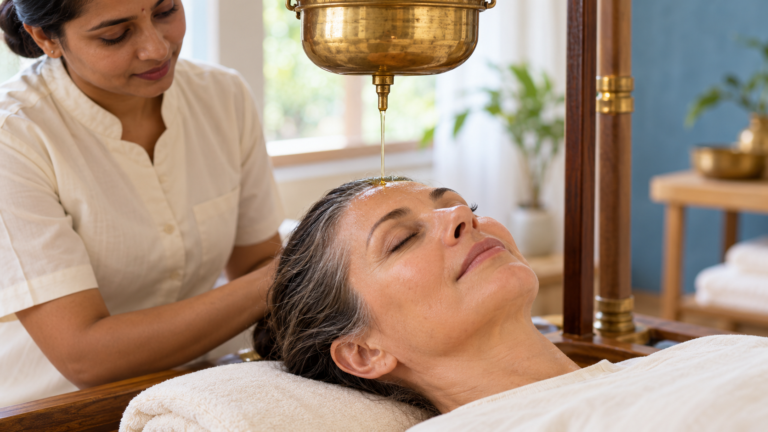
Panchakarma is a traditional Ayurvedic purification and rejuvenation program. It brings together assessment, preparation, selected treatments, meals, rest, and aftercare. It is more comprehensive than receiving an occasional massage.
At The Raj, the experience may include personalized oil therapies, nourishing vegetarian meals, consultations, and quiet time. These elements create a structured setting for rest, but research on massage or meditation alone does not prove that a week of Panchakarma will normalize stress hormones.
A retreat can be one part of a broader approach. It does not replace treatment for an anxiety disorder, depression, or another medical condition, and suitability should be assessed individually.
A Simple Way to Begin This Week
Choose one change that addresses the part of your day that feels least supported.
| If You Notice… | Try This |
|---|---|
| Your day begins in a rush | Prepare one morning task the evening before. |
| Work repeatedly interrupts lunch | Protect a realistic meal break on your calendar. |
| You feel overwhelmed by unfinished tasks | Decide what needs attention today and what can wait. |
| Evenings disappear into work or messages | Establish a clear stopping point when possible. |
| You are carrying responsibilities alone | Ask for one specific form of practical help. |
Give the change enough time to see whether it helps. A useful routine should fit your life and remain manageable on an ordinary day.
When Should You Seek Professional Help?
Consider speaking with a healthcare or mental-health professional if stress feels persistent, is becoming harder to manage, or interferes with sleep, work, relationships, or everyday activities.
Ongoing worry, panic, low mood, or loss of interest deserve attention. Physical symptoms should not automatically be attributed to stress either.
As the National Institute of Mental Health explains, professional care may be needed when symptoms persist or disrupt daily life. Seeking help is part of caring for yourself, not evidence that your routine has failed.
Personalized Ayurvedic Support at The Raj
The Raj Ayurveda Health Center is located in Fairfield, Iowa, known as The Ayurveda Capital of America. Grounded in Maharishi Ayurveda, our approach considers the individual’s daily routines, need for rest, and broader health concerns.
Guests come for rejuvenation, preventive wellness, and support while navigating chronic health concerns. An Ayurvedic consultation can help explore suitable routines and whether a residential Panchakarma program is appropriate.
To discuss your options, call our Guest Advisors at 1 (800) 864-8714 or learn more about The Raj’s Ayurveda experts.
Frequently Asked Questions
Is Stress Always Harmful?
No. Short-term stress is a normal response to a challenge and can help you take action. The concern is persistent or overwhelming stress that becomes difficult to recover from or interferes with daily life.
Does Feeling Stressed Mean My Cortisol Is Too High?
Not necessarily. Cortisol changes naturally throughout the day, and symptoms alone cannot establish an abnormal level. A healthcare professional can determine whether testing is appropriate.
How Quickly Can Stress-Management Habits Help?
Some activities may provide a brief sense of relief, while changes in sleep, boundaries, and routines may take longer to assess. There is no universal timeline. Seek support if symptoms persist or worsen.
Can Ayurveda and Counseling Be Used Together?
Yes. Appropriate Ayurvedic lifestyle guidance can complement counseling and conventional healthcare. Let your providers know about any herbs, supplements, or intensive treatments you are considering.
Do I Need a Retreat to Manage Stress?
No. Many useful changes begin at home through manageable routines, social support, and professional care when needed. A retreat is an optional way to devote time to individualized care and rest.