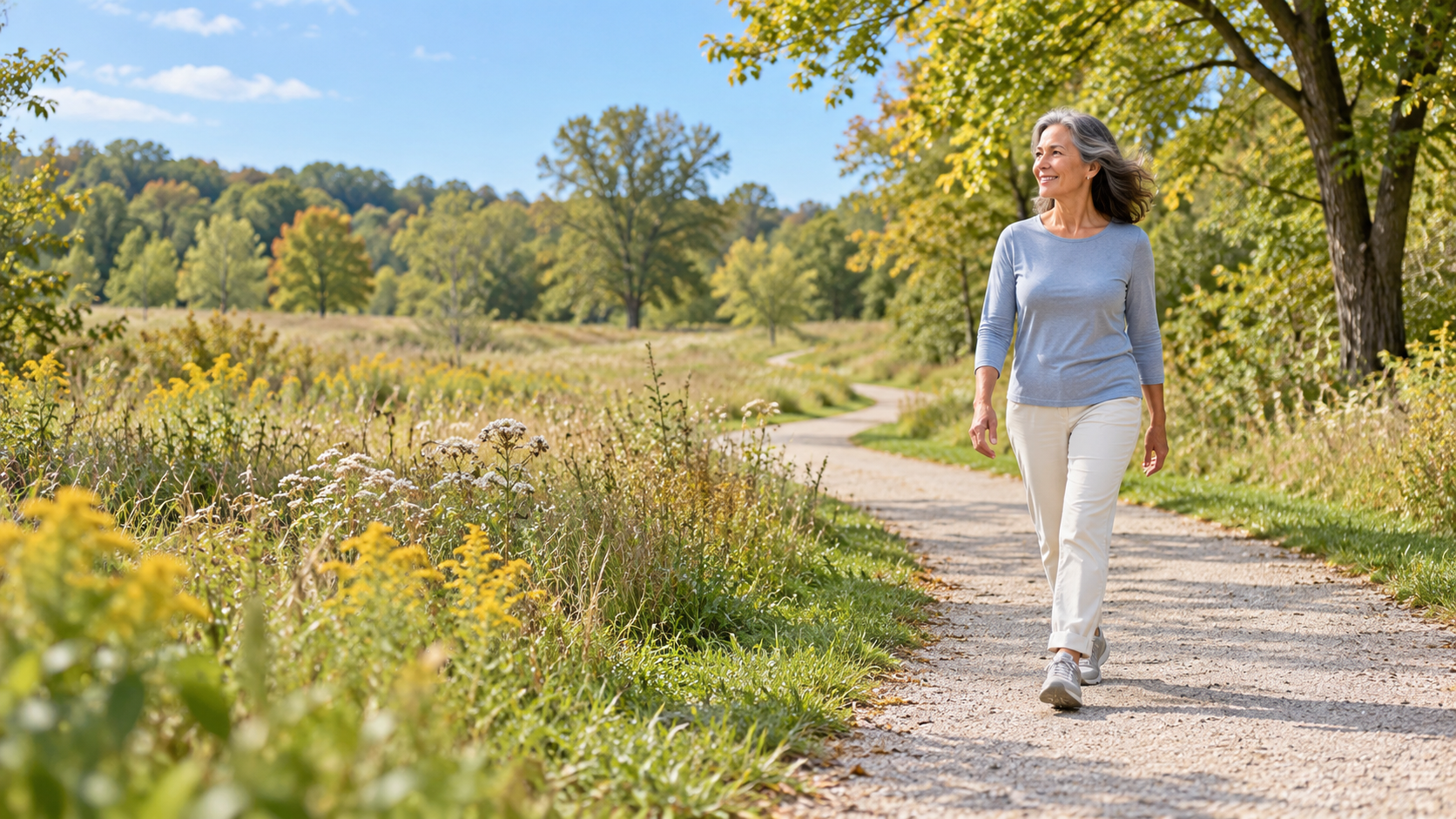
A walk can be calming, energizing, or simply a welcome break in your day. But how far should you walk, and at what pace? Ayurveda approaches these questions individually, taking into account your constitution, current energy, season, and daily routine.
Walking for your Ayurvedic body type means adapting movement to your needs. Whether you identify more with Vata, Pitta, Kapha, or a combination, the goal is a sustainable routine that supports you without unnecessary strain.
What Does Ayurveda Say About Walking?
In Ayurveda, exercise belongs alongside nourishing food, sufficient sleep, and rest as part of a balanced daily routine.
The three doshas provide a traditional framework for personalization. Vata is associated with movement and variability, Pitta with heat and transformation, and Kapha with stability and structure. Everyone has all three in different proportions.
Your Ayurvedic constitution can offer a useful perspective on how you approach exercise. However, it does not determine your fitness or prescribe exactly how many minutes you should walk. Your health, mobility, conditioning, and recovery remain essential considerations.
How Should You Walk for Your Dosha?
Vata: Choose Steady, Consistent Movement
For Vata, Ayurveda emphasizes regularity and avoiding overexertion. A familiar route and a dependable walking time can help bring steadiness to a busy or changeable schedule.
Walk at a comfortable, unhurried pace. If a longer outing leaves you depleted, shorten it or divide your activity into separate walks. This does not mean Vata types must always exercise gently. Let your actual stamina guide you.
During cold, windy weather, dress warmly or choose an indoor route. Our guide to Vata season explains how warmth and regular routines fit into seasonal Ayurvedic care.
Pitta: Enjoy Movement Without Overdoing It
For Pitta, the emphasis is on balancing purposeful activity with moderation. A satisfying walk does not need to become a competition with yesterday’s distance or speed.
Choose a pace that provides appropriate effort without pushing yourself unnecessarily. A pleasant route or walking companion can help shift attention from performance to enjoyment.
In hot weather, consider cooler hours, shade, or an indoor setting. Avoiding overheating matters for everyone, regardless of dosha.
Kapha: Build Momentum Gradually
For Kapha, Ayurveda encourages regular movement that feels stimulating and energizing. A scheduled walk, a companion, or a specific destination can make getting started easier.
As your fitness develops, you might add a little distance, short brisk intervals, or gentle hills. Introduce these changes gradually and only when your joints, balance, and stamina allow.
Being Kapha does not mean you should immediately undertake long, strenuous walks. Consistency comes first, followed by a manageable increase in effort.
| Dosha | Traditional Emphasis | Practical Approach |
|---|---|---|
| Vata | Steadiness and regularity | Choose a repeatable routine and avoid exhausting yourself. |
| Pitta | Moderation and comfortable conditions | Enjoy appropriate effort without competition or overheating. |
| Kapha | Stimulation and momentum | Establish a routine, then gradually add pace or distance. |
How Much Walking Do You Need?
For most adults, CDC physical activity guidelines recommend at least 150 minutes of moderate-intensity activity each week, plus muscle-strengthening activities on at least two days.
Brisk walking can contribute to that weekly total. Thirty minutes on five days is one option, but shorter walks count too. If you are starting after a period of inactivity, begin with an amount you can comfortably repeat and build gradually.
To judge intensity, try the conversation test. The National Institute on Aging explains that moderate activity generally allows you to hold a conversation. If you can say only a few words before pausing for breath, your effort is more vigorous.
Your dosha should not override your physical capacity or medical guidance.
What Are the Benefits of Walking?
Heart and Metabolic Health
Regular physical activity can reduce the risk of heart disease, stroke, and type 2 diabetes, while helping improve blood pressure and cholesterol levels. Brisk walking is one accessible way to obtain these physical activity benefits.
Mood, Sleep, and Mental Well-Being
Physical activity can help reduce feelings of anxiety and depression, improve sleep, and support aspects of cognitive function. The National Institute on Aging’s overview also highlights the social benefits of exercising with others.
A walk may offer time to unwind or connect with a friend. It can support mental-health care, but it should not replace treatment when needed.
Endurance and Everyday Activity
Consistent walking can help build aerobic endurance, making everyday outings feel more manageable. It also offers a practical way to interrupt long periods of sitting.
Walking works best within a varied activity routine. Include appropriate strengthening exercises and, particularly as you get older, balance activities.
Weight Management
Walking increases the energy your body uses and can contribute to weight management. Results depend on eating patterns, overall activity, health, and other individual factors. No walking schedule or Ayurvedic body type guarantees weight loss.
How Can You Walk Comfortably and Safely?
Start and finish slowly. Begin with easy walking before increasing your pace, then slow down toward the end. This allows your breathing and heart rate to adjust gradually, as recommended in the National Institute on Aging’s guidance for staying active.
Choose suitable footwear and terrain. Wear comfortable, supportive shoes. A smooth route may be preferable if you have joint discomfort or balance concerns. Keep an indoor option available for unsuitable weather.
Increase one thing at a time. When your usual walk feels manageable, add a little duration or pace rather than changing everything at once.
Keep stretching gentle. Stretching is optional and does not replace warming up. If you enjoy yoga or gentle stretches, adapt them to your abilities and avoid painful movements.
Pay attention to warning signs. Faster breathing is expected during brisk walking. Chest pain, dizziness, or unusual breathlessness are reasons to stop. Seek urgent medical help for chest pain, fainting, or severe shortness of breath. If an injury or chronic condition affects your activity, ask a healthcare professional for individualized guidance.
Personalized Ayurvedic Guidance at The Raj
Ayurveda considers walking within the larger pattern of your life, including meals, sleep, work, seasonal changes, and rest.
At The Raj Ayurveda Health Center in Fairfield, Iowa, personalized care is grounded in Maharishi Ayurveda. An Ayurvedic consultation can help you explore your constitution and the daily habits that may support greater balance.
Traditional pulse assessment may form part of this process, but it does not replace medical evaluation of exercise safety. Learn more about The Raj’s Ayurveda experts or call 1 (800) 864-8714 to speak with our Guest Advisors.
A useful walking routine begins with what you can do today. Choose a manageable starting point, return to it consistently, and allow your routine to develop with you.
Frequently Asked Questions
Do I Need to Know My Dosha Before Walking?
No. Start with your current health, fitness, and mobility. Ayurvedic principles can help you personalize the experience, but knowing your constitution is not a requirement.
What if I Have a Mixed Ayurvedic Constitution?
You do not need to combine separate exercise prescriptions. Consider the adjustments that help you most, such as a steadier schedule, cooler conditions, or more encouragement to get started.
Can I Divide My Walking Into Shorter Sessions?
Yes. Several shorter walks can contribute to your weekly activity. Choose a pattern that fits your schedule and stamina, remembering that intensity matters as well as duration.
Does Indoor Walking Count?
Yes. Walking indoors can contribute to your activity goals. A comfortable indoor route is a useful alternative when outdoor conditions are unsuitable.
Should I Carry Weights While Walking?
Weights are not necessary for an effective walk. Keep your arm movement natural and include separate strengthening exercises if building muscle is a goal. Seek individualized guidance before adding resistance if you have joint or balance concerns.